Jun 22, 2026
By: The team of early childhood nerds who think your toddler is kind of a genius - Children's Museum Houston
You know that moment when your child is completely absorbed in play? Maybe they are narrating an elaborate story to their stuffed animals, or they have dumped every block on the floor and are very serious about it. Here is the thing: all of that counts. Play is how young children build the skills that matter most, not just for school, but for life. The best part is you do not need flashcards or perfectly planned activities. You mostly just need to get out of the way.
There are three kinds of play that work together to help little ones grow. Think of them less as categories and more as ingredients. Most of the recipe is open-ended play. The other two are seasoning.
This is the big one. Free, child-directed play is where creativity, resilience, and self-regulation are born. The American Academy of Pediatrics, Dr. Stuart Brown, and education researcher Peter Gray all agree: unstructured play is the foundation of healthy development, and it should take up the biggest chunk of a young child's day.
It looks like a three-year-old who has decided the couch cushions are a boat and the floor is definitely lava. A four-year-old deep in a pretend kitchen cooking something with seventeen invisible ingredients. No rules, no right answer, just a child figuring out how the world works on their own terms. At home, you do not need much: blocks, scarves, a cardboard box. Set it out, step back, and watch what happens.
At CMH: Our Gallery of Wonder is made for exactly this. Wide open, sensory-rich, and full of possibility. Come with no agenda. Leave with a very tired and very happy child.
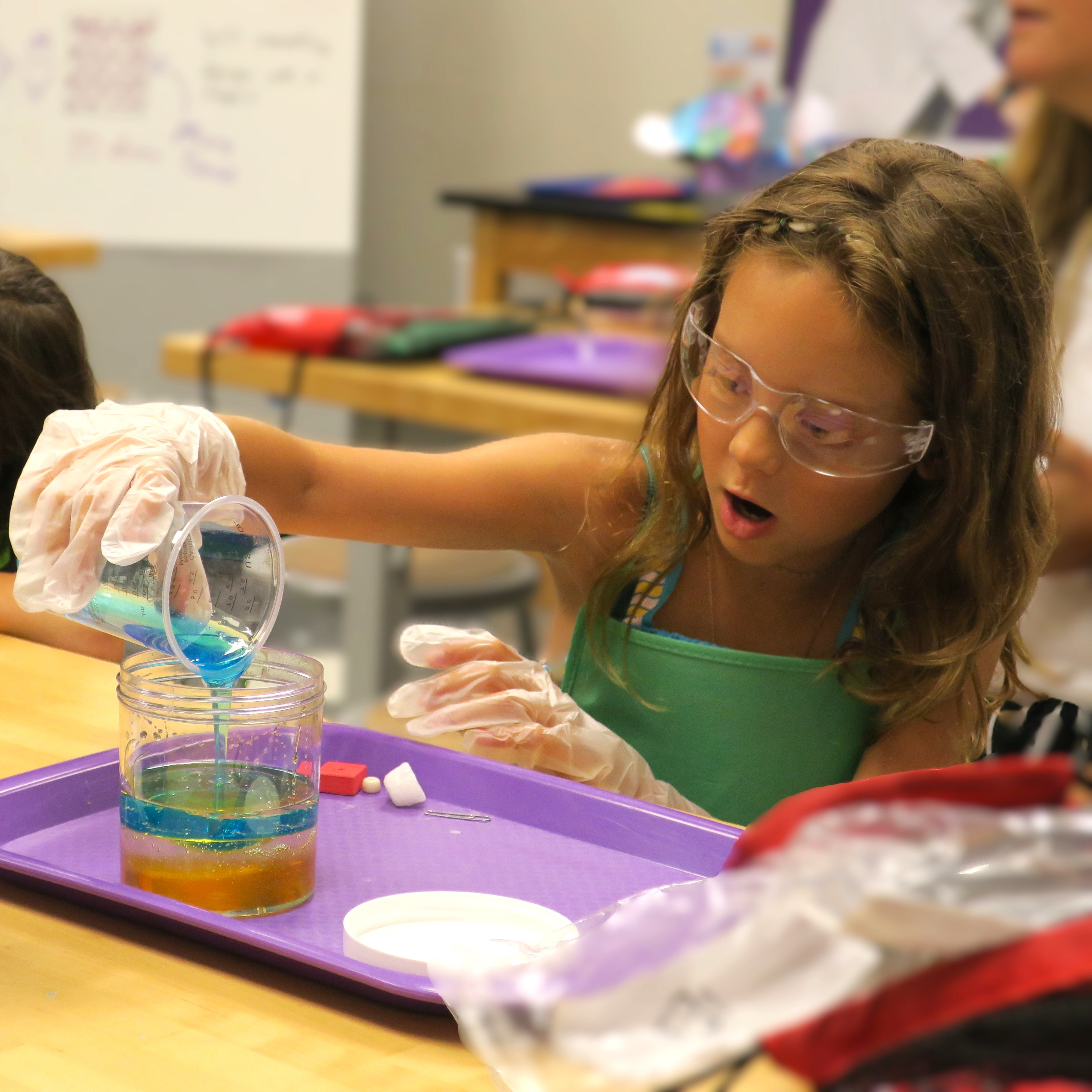
Semi-structured play is what happens when a grown-up sets the stage and then hands the script to the kid. You put out paint and say "I wonder what you can make." You fill a bin with water, add some cups, and ask "What do you think will happen?" You are there and engaged, but your child is driving. This balance encourages imagination, flexibility, and deeper thinking, and it is a beautiful low-pressure way to weave in early concepts like counting, colors, and cause and effect.
A few minutes a day is plenty for a one or two year old. By age four or five, most kids can stay engaged for 15 to 20 minutes, which is right around what kindergarten will ask of them. No pressure, just gradual and playful practice.
At CMH: Color Splash Playdate and STEM Bites for Little Learners are perfect examples of semi-structured play in action. Our Basics Houston and Para Los Ninos Fun*Shops send families home with real ideas for any age. More on our Early Learners page.
Structured play has rules, a shared goal, and usually other people. Circle time, a group movement game, a song where everyone does the same thing at the same time. Done well, it is a blast, and it teaches something nothing else quite can: how to be part of a group. Taking turns, listening, managing the feeling of waiting, these are the skills kindergarten teachers quietly hope every child walks in with.
The best structured play is often co-created. When children help set the rules, they are practicing language, negotiation, and ownership all at once. Keep it short and fun. A few minutes is a win for a toddler. By age five, children can hold their own in a group activity for 20 to 30 minutes, and playful group experiences are what get them there.
At CMH: Classical Sing, Move and Play! and Zumbini are basically a party with developmental benefits. Toddlers and preschoolers love them.
A play-rich day does not have to be complicated. Open-ended play in the morning, a short playful activity where you explore something together, a silly group game before lunch. That is school readiness in action, and it is already happening in your home.
Browse upcoming Toddlers and Pre-K events to find something fun for this week or visit our Early Learners page for age-by-age ideas you can use at home, at the park, or in the cereal aisle. Play is everywhere. Go find it.
References: Ginsburg, K.R. & the American Academy of Pediatrics (2007). Pediatrics, 119(1). | Brown, S. (2009). Play: How It Shapes the Brain. | Texas Kindergarten Readiness Guidelines (TKRG). | Gray, P. (2013). Free to Learn. Basic Books.


Sign up for e-news and be the first to know about special events, discounts and more!


.png)